

On 24 September, EU ministers met to discuss some of the core elements of Europe’s competitiveness agenda, including the Chips Act 2.0 and how economic security should be embedded in EU competitiveness policy through new merger guidelines. Ministers also reviewed progress on the Industrial Accelerator Act (IAA) and the European Competitiveness Fund (ECF).
Taken together, discussions across files point to the same underlying challenge: Europe needs to build and retain more of the industrial, technological and energy capacity to protect and reinforce its competitiveness and security
The real test is not whether Europe can produce another set of strategies for semiconductors, clean technologies or financing. It is whether those strategies reinforce one another and deliver coherent outcomes in the real economy .
The Council discussions showed that Europe is moving in this direction. There is growing recognition that industrial capacity, strategic dependencies, economic security and investment cannot be treated as separate questions.
The next step is to reflect that in how policy is designed and implemented.
Chips, Batteries, Grids: The technologies are integrated, policy must be too
As Catalyse Europe has argued with the Backbone Coalition, batteries are foundational to grids, industrial electrification, data centres and defence.
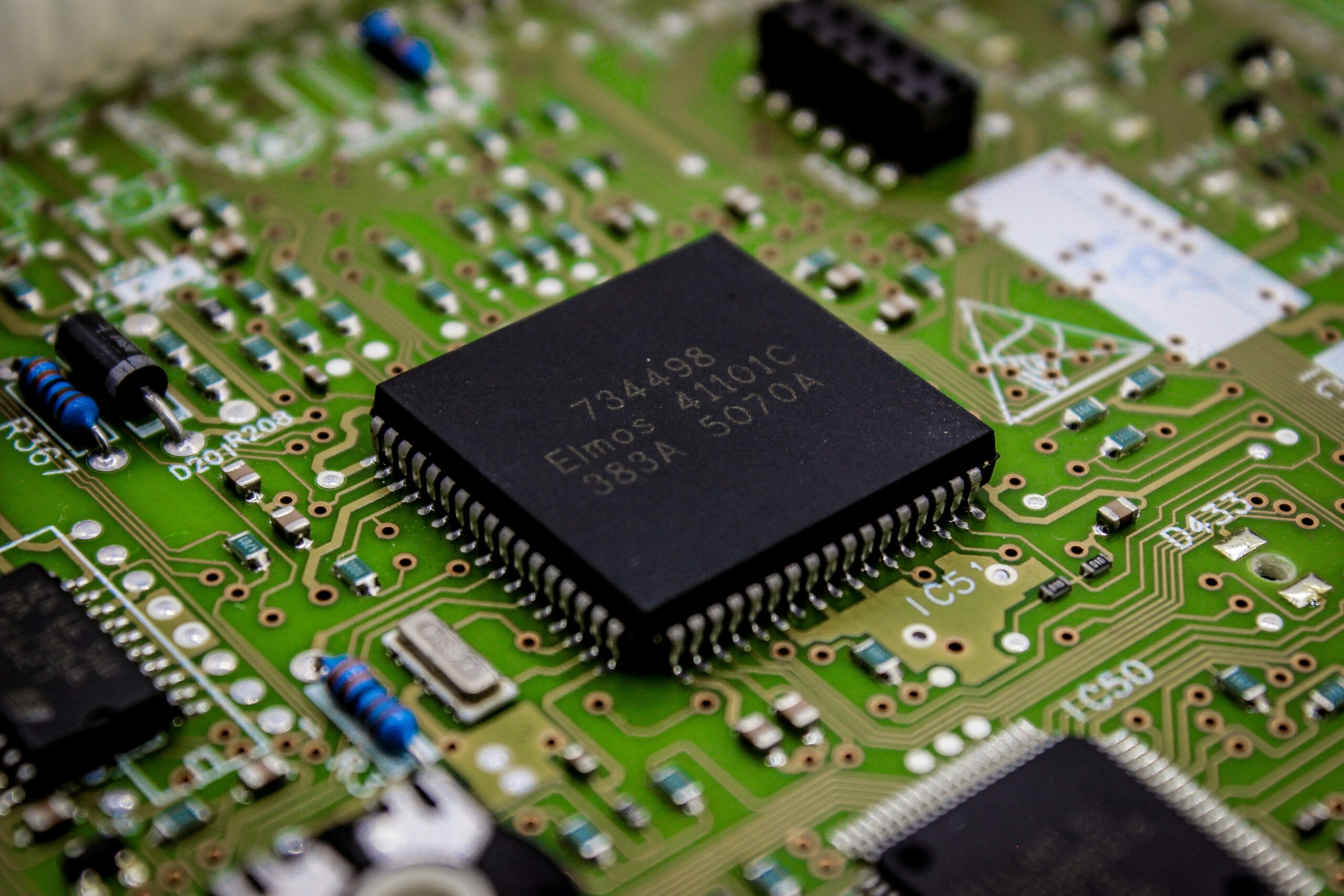
Semiconductors are inseparable from this. Chips make battery management systems, power conversion, inverters and grid software operational and secure.
Hence, a European battery built with foreign controlled chips and software can represent a strategic vulnerability. A grid increasingly dependent on digital technologies cannot be considered secure if critical components and systems remain exposed to concentrated or external dependencies.
Europe does not need to produce every component domestically. Open trade and cooperation with trusted partners will remain essential. But it does need a clearer view of which capabilities are critical, where dependencies create real strategic risk and in which segments of the value chain European production needs to be built or retained.
Semiconductor strategy and clean industrial strategy therefore need to be built as part of the same approach, because the technologies themselves already are.
The IAA’s lead markets and European preference provisions, the Chips Act’s resilience agenda and the ECF’s financing ambitions should all support the same objective: scaling European industrial capacity while reducing strategically important dependencies.
This means that Made in Europe requirements need to create genuine demand for European production, while FDI conditions should protect critical European industrial capacity where real strategic risks exist. Hardware and software security restrictions should also be coherent across sectors.
Implementing an effective financing framework for one strategy
A coherent industrial strategy also needs a coherent financing framework.
The scale of investment required across clean and digital technologies, the energy transition, Europe’s industrial base and security cannot be met through fragmented and slow instruments.
No industrial strategy can deliver without deliberate public financing that ultimately helps attract and devlier private investment at scale.
The ECF should form part of one coherent financing architecture with the policy the EU is pursuing across the clean and digital transition, defence and competitiveness aligned.
Bankable and predictable support that companies can take to investors and lenders is needed across sectors. Financing the clean transition, industrial capacity and defence readiness should not be treated as entirely separate policy objectives when they increasingly depend on the same technologies, infrastructure and supply chains.
The ECF, and broader EU budgetary discussions on the Multiannual Financial Framework for 2028 to 2034, should reflect this throughout. The Council has already backed an ECF structure intended to reduce dependencies, support strategic technologies and draw in private investment alongside public funding.
Funding structures need to be updated for the challenges Europe faces. Instruments need to be simpler, faster and designed to unlock private capital, notably through de risking and output-based support.
From separate files to one strategy
The Competitiveness Council showed that Europe increasingly understands the different parts of the competitiveness challenge.
It understands the need to reduce strategic dependencies. It understands the importance of rebuilding industrial capacity. It understands that financing, demand creation and economic security all matter.
What is still missing is a policy framework that consistently treats these as parts of the same strategy.
The Chips Act, the IAA and the ECF should not succeed or fail independently of one another. They should also be judged by whether, together, they help Europe build competitive industries, attract investment, secure critical technologies and reduce strategic vulnerabilities.