

By Shahin Vallée, Senior-Fellow, Catalyse Europe
On 29 June, Catalyse Europe hosted a series of panels on the Industrial Accelerator Act that I contributed to by moderating a session, just as Commerce Minister Wang Wentao and Trade Commissioner Maroš Šefčovič co-chaired the inaugural meeting in Brussels of what is now formally called the China-EU Trade and Investment Consultation Mechanism, and issued a rare joint statement.
The mechanism is built around four workstreams (i) trade and investment balance, (ii) export controls, (iii) intellectual property, and (iv) WTO reform, plus a joint monitoring arrangement. The two sides exchanged market access lists and committed to another ministerial meeting in the autumn, with Šefčovič setting an ambitious target of tangible results before October.
Wang used the occasion to push back directly on the EU’s legislative pipeline, raising specific concerns about the revised Cybersecurity Act and the Industrial Accelerator Act, and reiterating that China sees itself as a partner for the EU rather than the source of its difficulties. China is also trying to propose a purchase agreement to create some level of trade rebalancing focusing on politically sensitive areas like agricultural products in a replay of what was achieved by China with the US under Trump I.
While I welcome these efforts (but remain somewhat doubtful that they will yield results), I am equally if not more doubtful that the EU has the political will to follow through with decisive trade action should this diplomatic track fail.
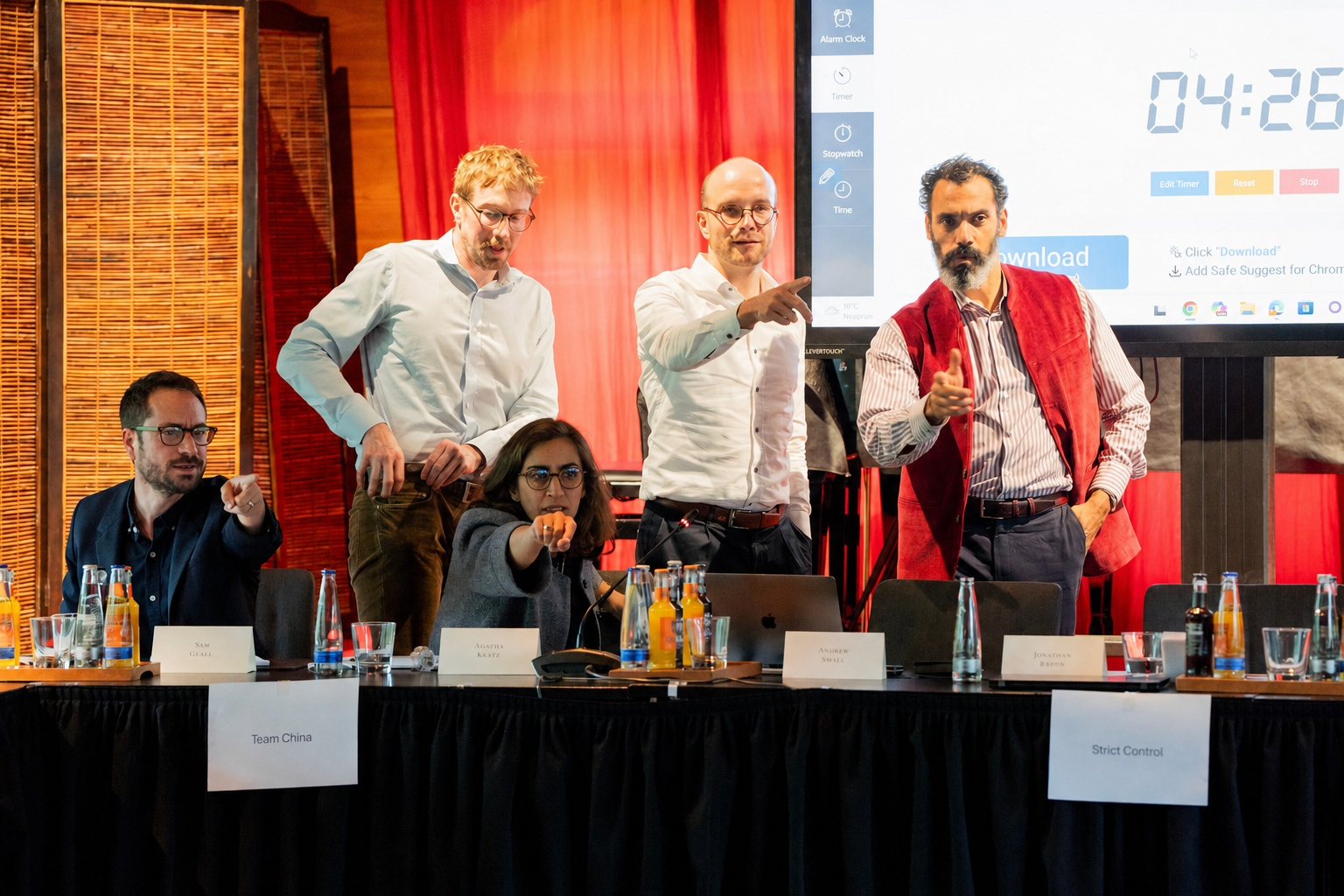
A couple of weeks ago, I participated in a war game / simulation of a negotiation between the EU and China on trade matters organized by Catalyse Europe in Elmau, Germany with a number of European trade policy experts. Alan Beattie attended and wrote about it for the FT and concluded that the EU had very little leverage and that it would be unwise to start a trade conflict with China.
I reached a broadly similar conclusion based on what I observed during the game. The EU threatened to escalate its trade defence instruments but was quickly subdued by a Chinese offer that would achieve some level of rebalancing in the trade relationship but without firm enough commitments to make the pledge very credible. Despite the lack of credibility of this more cooperative offer, the EU negotiating team went along in part because it couldn’t secure a consensus decision by the European Council on another more coercive way forward. Still, the fact that Europeans didn’t agonise and explode into divisions, was in itself perhaps a positive outcome.
It became clear that the path of least resistance for Europe would be one of a tentative negotiated solution, without much certainty about the outcome. This squared almost perfectly with the EU’s ongoing efforts. The fairly short deadline given to achieve tangible results by October is important because the October European Council is likely to return to the issue.
Finally, worth noting in parallel: Minister Wang Wentao also met Germany’s Economy Minister on the same trip, and the two sides agreed to restart the moribund China-Germany Economic Cooperation Joint Committee, a bilateral hedge next to the EU dialogue and one that might matter as much if not more.
For more on the exercise, Alan Beattie’s piece in the FT is well worth reading. https://www.ft.com/content/d2cc2b13-fb04-4b7e-a567-6f47b710afb1?syn-25a6b1a6=1